


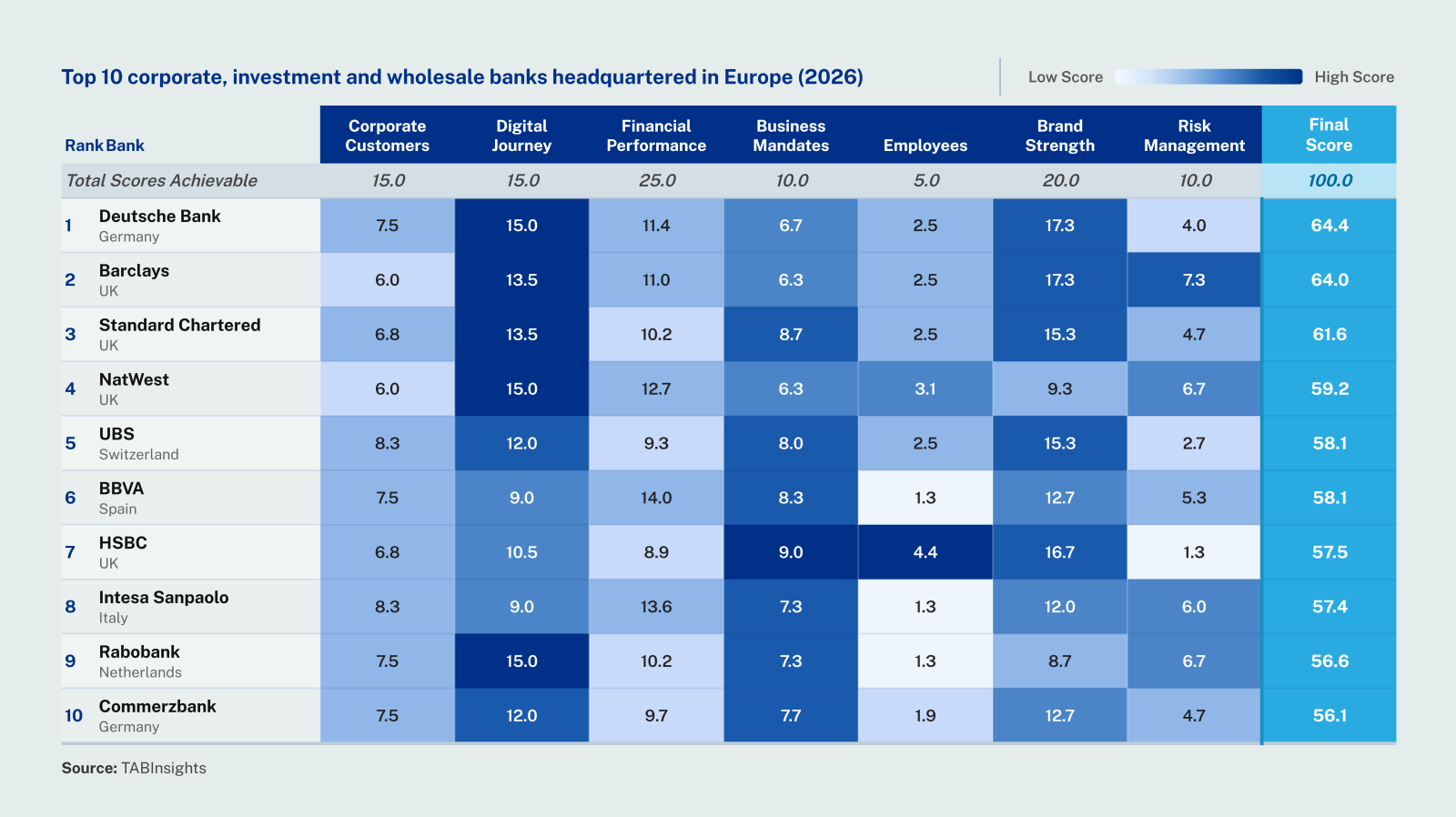
Deutsche Bank leads the 2026 TABInsights CIW ranking among Europe-based corporate, investment and wholesale banks, as digital capability, operational efficiency and franchise strength increasingly differentiate the region’s top institutions.
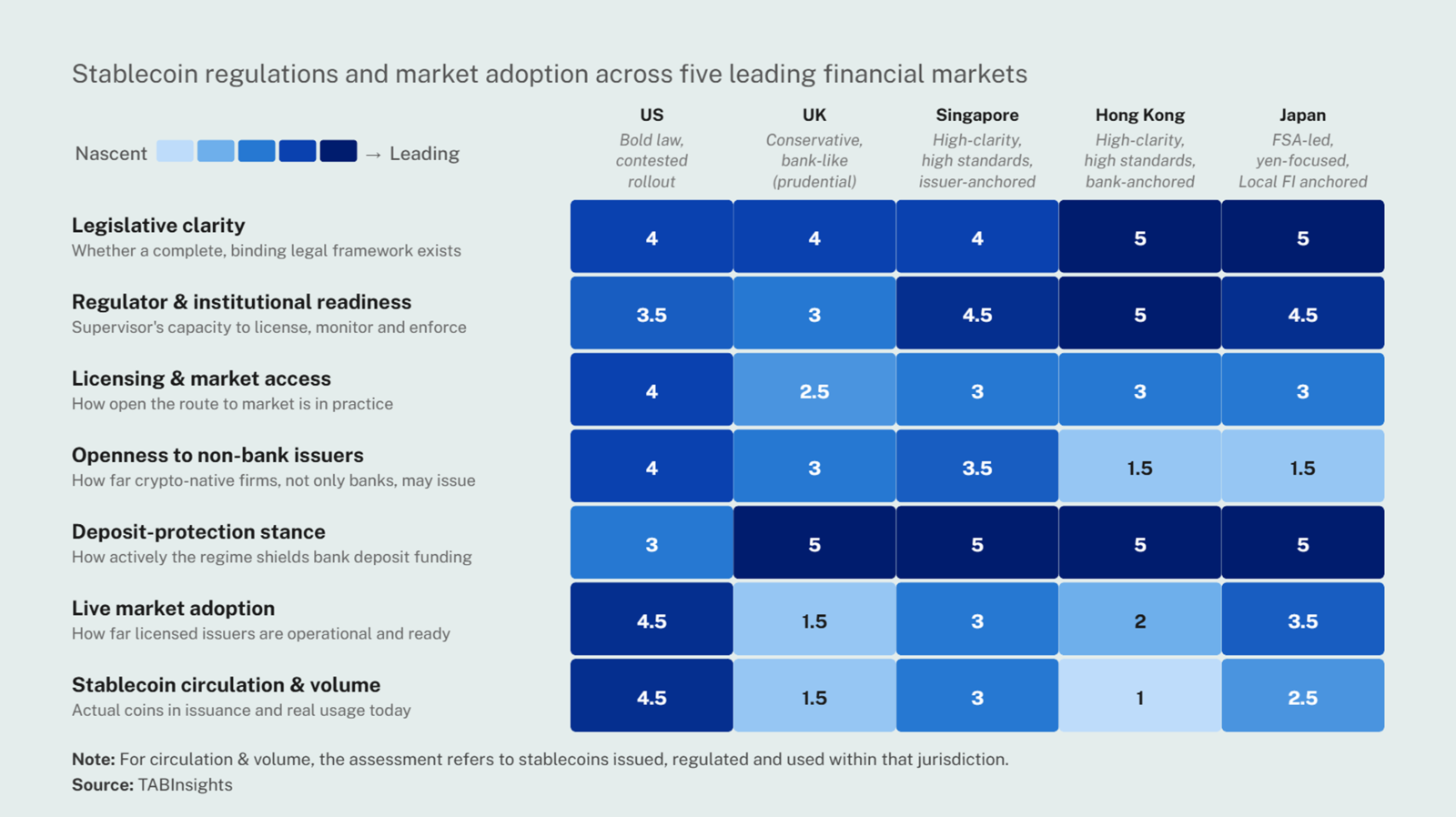
With the July 2026 deadline for US agencies to finalise the implementation of the GENIUS Act approaching, we examine five of the world’s most consequential stablecoin regimes, the United States, United Kingdom, Singapore, Hong Kong and Japan. While these jurisdictions have largely aligned on what constitutes stablecoin, none has yet delivered a commercially scalable market. The real contest has shifted to access, distribution, commercial viability and control—factors that will determine who builds the next generation of payment infrastructure.

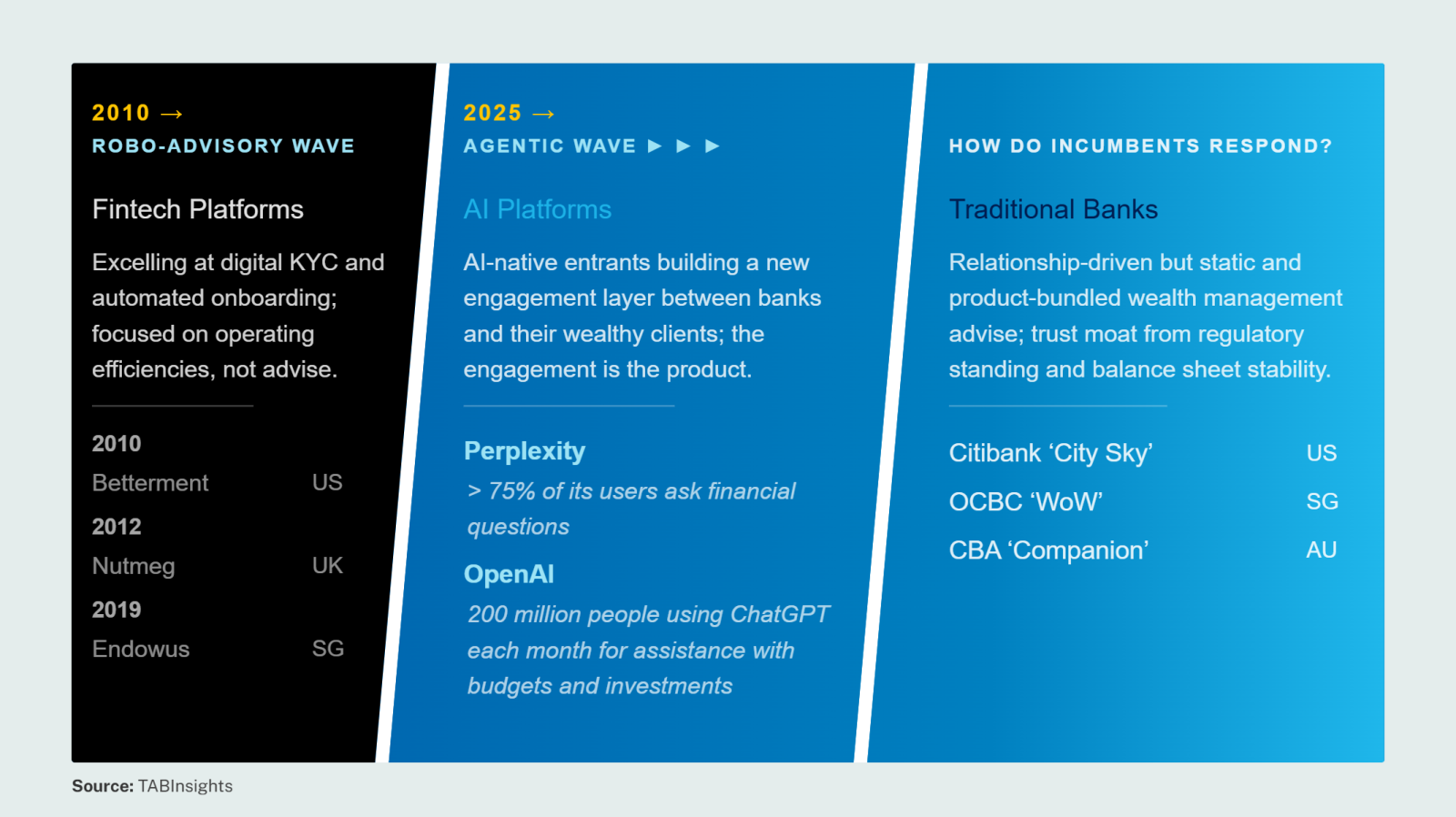
Banks overcame the robo-adviser challenge by retaining control of the client relationship. The next battleground is the financial conversation itself, as AI platforms become the primary interface through which customers seek advice, interpret information and make decisions.
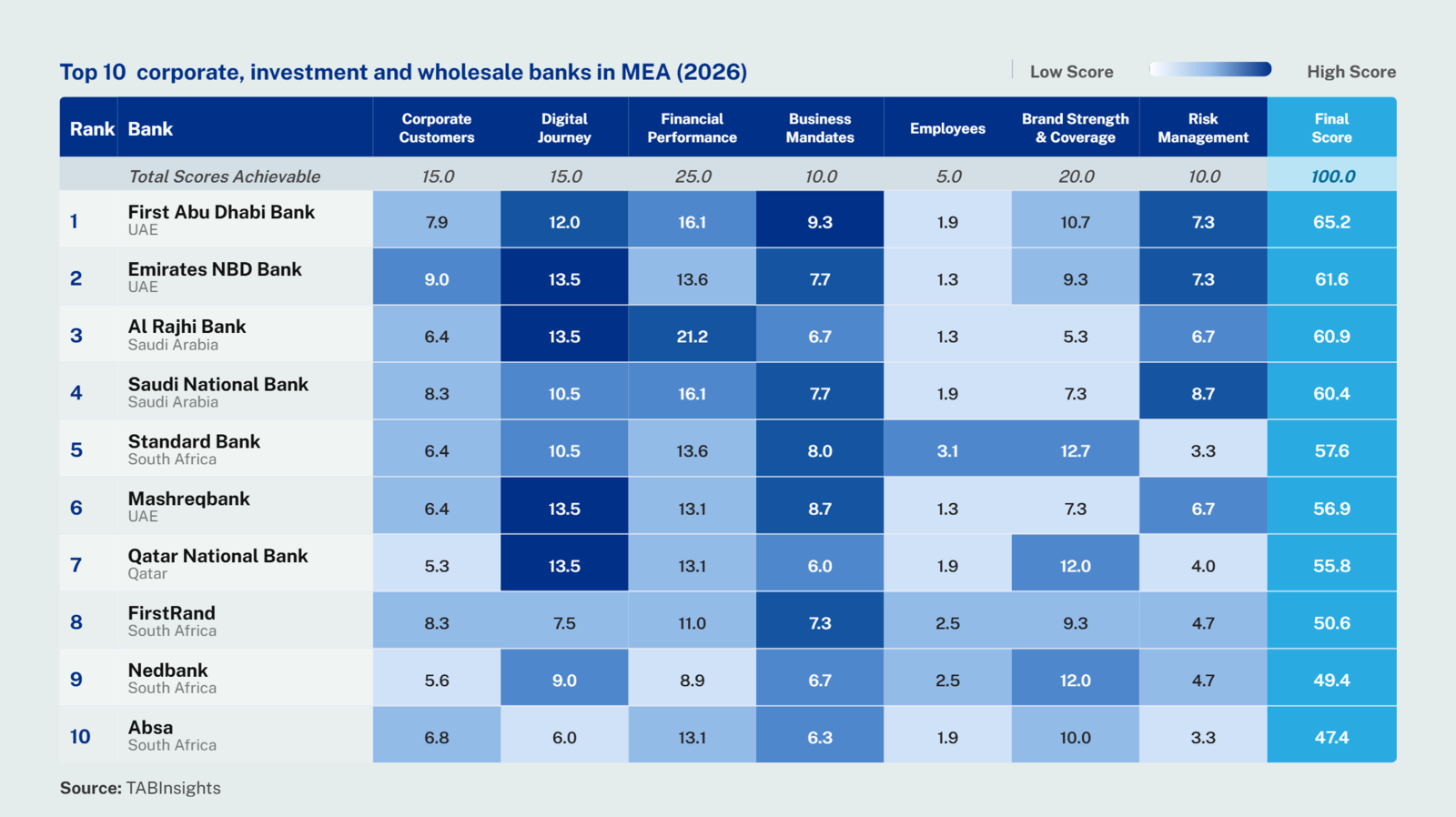
The 2026 ranking highlights how Gulf and African banks are pursuing different strategies to strengthen their corporate and wholesale franchises, with digital capability, regional connectivity, capital markets expertise and disciplined financial performance emerging as key competitive differentiators.
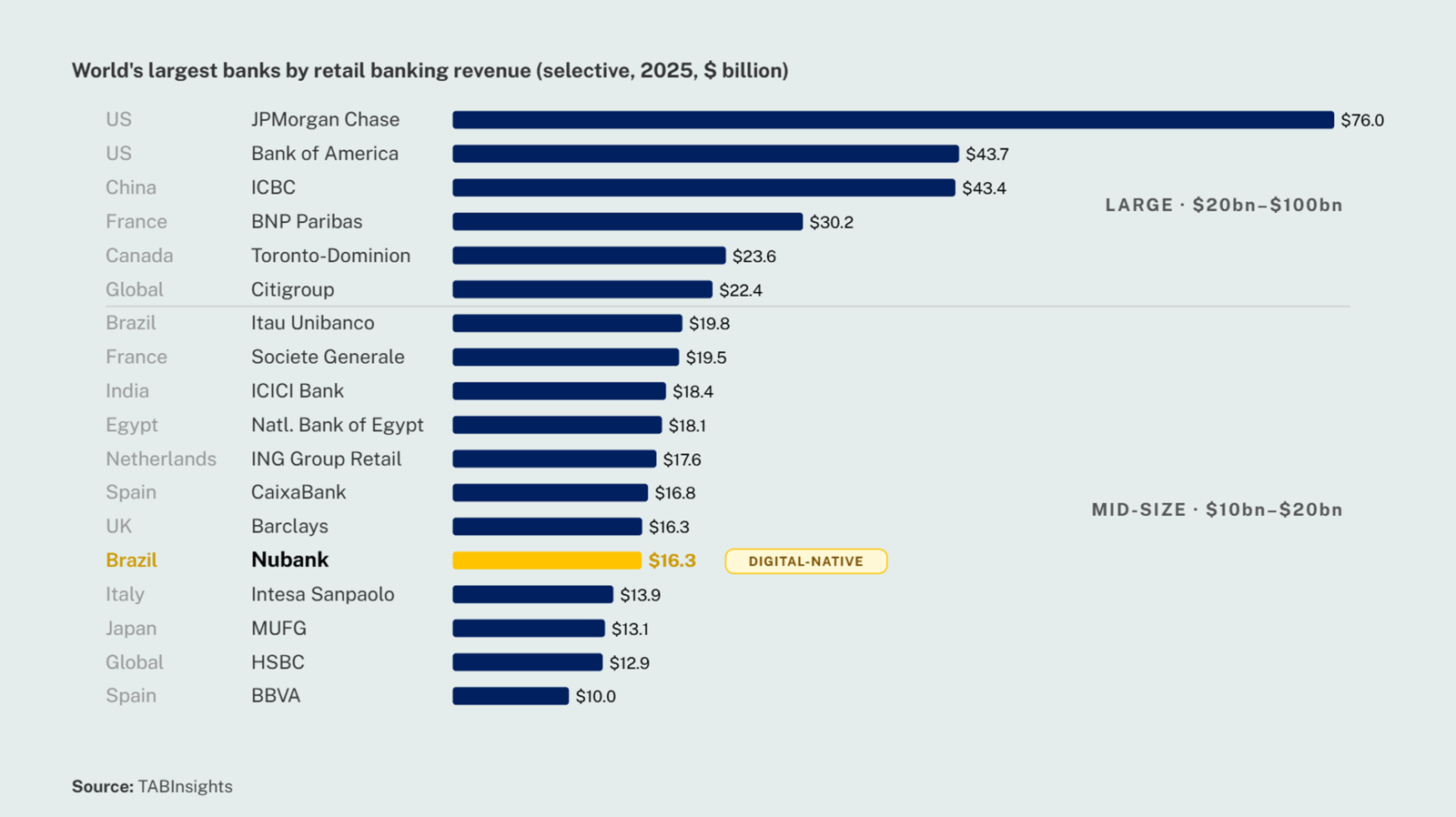
A decade ago, Nubank was a credit card start-up operating out of São Paulo. Today, at $16.3 billion in retail banking revenue (2025), it has surpassed HSBC and Standard Chartered’s global retail banking businesses and is on track to overtake Itaú Unibanco in Brazil in 2026 and Citigroup by 2027. What is emerging is not just rapid growth, but the early stages of a long-term strategy to build a global retail banking franchise.